Choosing a Green Terror
If you’re looking for fish with an attitude, green terrors (Aequidens rivulatus) may be your match. These fish are from the large family of cichlids and are natives to South America. While beautiful in appearance, you’ll need to like these fish a lot because it is likely they’ll be the only type of fish in your tank.
Appearance and Behavior
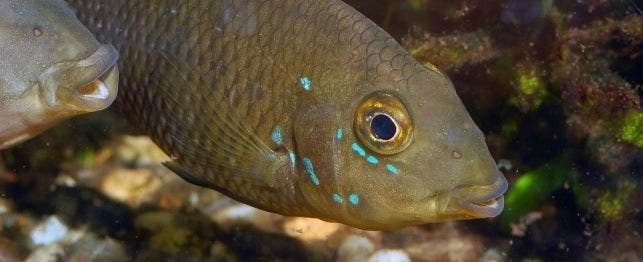
True to their name, green terrors have beautiful iridescent green scales that contrast with darker black ones, giving an overall striped appearance. The males are larger than the females and develop a prominent “bump” on the front of the head as they mature. The female is smaller and drab by comparison. They can reach a length of 10 inches.
Again, true their names, green terrors are an aggressive, territorial fish. They form strong breeding pairs and both parents participate in raising and protecting the fry. Green terrors are best kept as a single species or with other larger cichlids able to defend themselves. Expect territorial disputes and injuries unless they have a very large tank. These fish like to rearrange their habitats, so secure any large rocks with aquarium sealant to prevent an avalanche.
Feeding and Tank Requirements
Green terrors are primarily carnivorous and prefer a diet of live food. Feeder goldfish, minnows, earthworms, fish fillet and beef heart are all accepted. With a little persistence you may get them to accept a few flake foods or cichlid pellets. The babies eat brine shrimp.
These fish prefer a tank with rocks, outcroppings and hiding places. A small clay pot turned on its side works well. Water temperature should be maintained between 68 to 75 degrees Fahrenheit, pH 6.8 to 7.5. Because of their high protein diet, more waste will be produced so extra filtration and attention to ammonia will be needed.
Special Concerns
Add tank mates with care. These fish will not hesitate to consume smaller species. Jack Dempsey’s, Oscars and convicts may work. Provide the largest tank possible. All of these fish become more aggressive when breeding.